

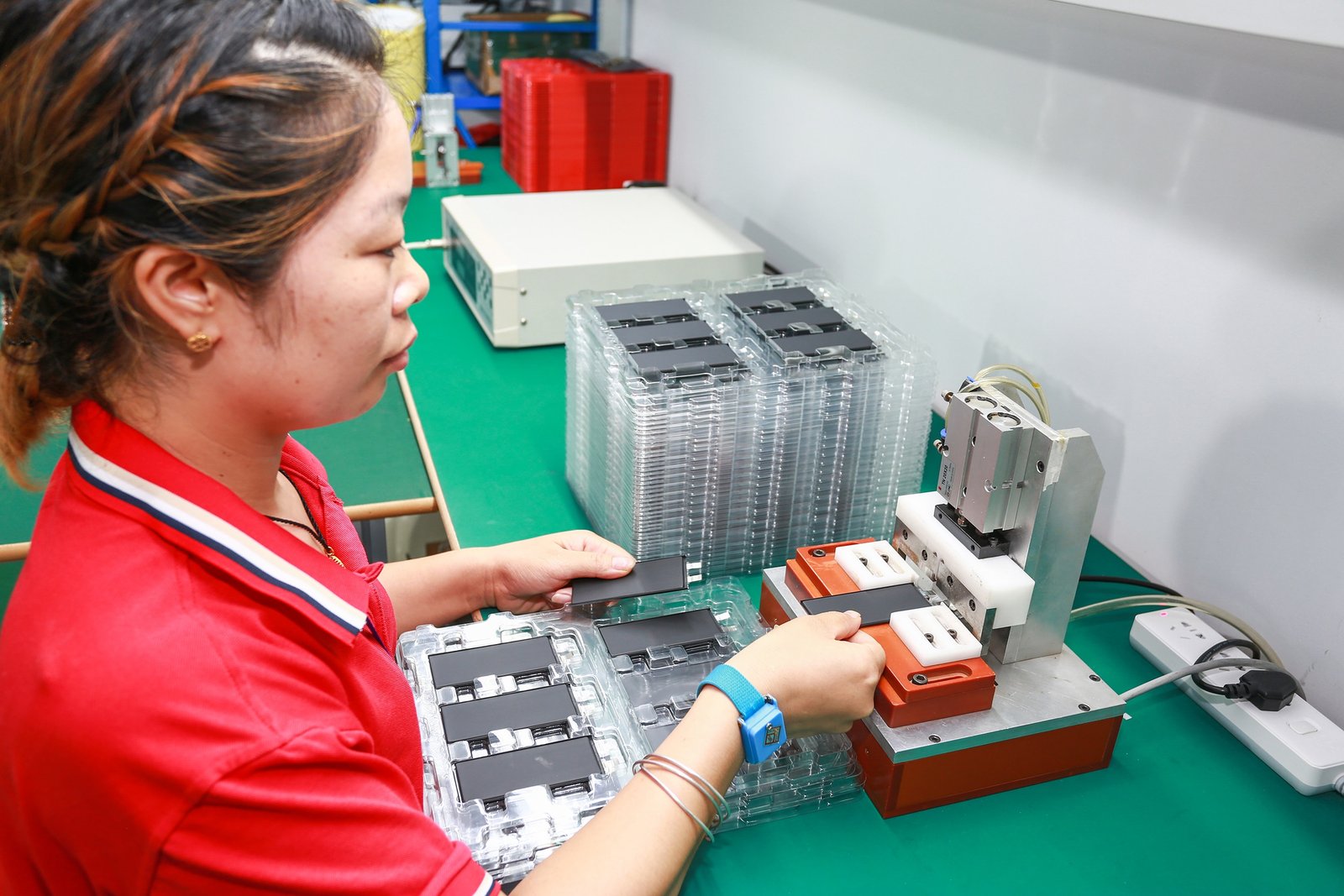
With over a decade of battery factory working experience, I’ve gained a deep understanding of the entire mobile phone battery manufacturing process. For those who cannot visit our factory in China, I’d like to share an overview of the production process. It take me couple days to organize and translate the materials. Hope it can help you create an idea how to produce a mobile phone battery. Our battery manufacturing is roughly divided into the following 14 key steps:
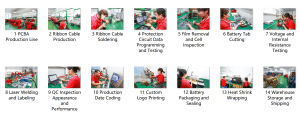
battery produce process
1. PCBA Production Line
The production process begins with the creation of the Printed Circuit Board Assembly (PCBA), which forms the core of the battery’s protection circuit. This step involves mounting essential electronic components onto the PCB using advanced machinery to ensure high precision and reliability.

2. Ribbon Cable Production
Ribbon cables, which connect the battery to the device, are produced on dedicated production lines. These cables are custom-designed for different battery models to ensure compatibility with specific mobile phone requirements.
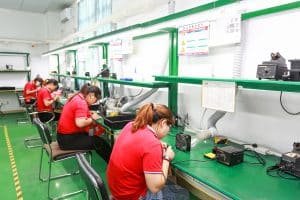
3. Ribbon Cable Soldering
The produced ribbon cables are then soldered onto the PCBA. Skilled technicians and automated machines ensure that the soldering process is seamless and secure, providing a stable connection for optimal performance.

4. Protection Circuit Data Programming and Testing
The PCBA undergoes data programming, where critical software is uploaded to the protection circuit to regulate battery safety features, such as overcharging and overheating protection. Afterward, the PCBA is rigorously tested for functionality.
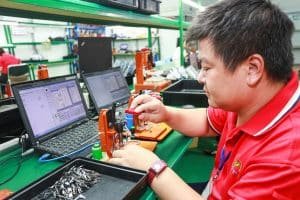
5. Film Removal and Cell Inspection
The protective film on the battery cell is carefully removed, exposing the cell surface for further processing. During this step, the appearance of the cell is thoroughly inspected to ensure there are no defects, such as scratches or dents.
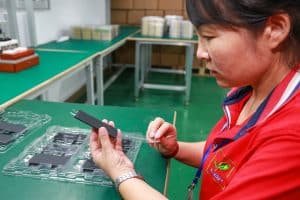
6. Battery Tab Cutting
The battery tabs (positive and negative terminals) are precisely cut to the required size using high-precision machinery. This ensures compatibility with the subsequent assembly processes.
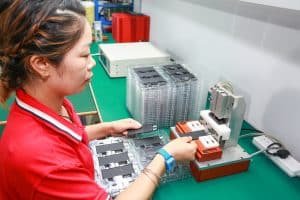
7. Voltage and Internal Resistance Testing
The voltage and internal resistance of each battery cell are tested to ensure consistency and compliance with quality standards. Cells that fail to meet these specifications are rejected.

8. Laser Welding and Labeling
The battery cells are laser-welded to the PCBA, creating a durable and reliable electrical connection. After welding, labels are applied to the battery for identification and traceability. This step also marks the completion of the basic battery assembly.
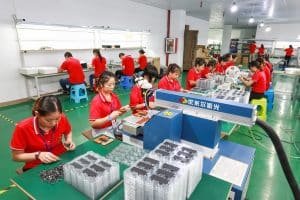
9. QC Inspection: Appearance and Performance
Every battery undergoes a quality control (QC) inspection. This includes a visual check for appearance defects and comprehensive performance testing to ensure the battery meets safety and durability requirements.

10. Production Date Coding
A production date code is sprayed or printed onto each battery. This code is essential for tracking the manufacturing date and batch, ensuring traceability in case of future issues or recalls.

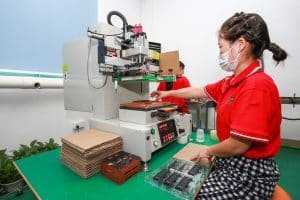
11. Custom Logo Printing
For clients requiring branding, the customer’s custom logo is silk-screen printed onto the battery. This step ensures the final product aligns with the customer’s branding requirements.
12. Battery Packaging and Sealing
The finished batteries are carefully packaged and sealed to protect them from dust, moisture, and physical damage during transportation. Each package is designed to comply with safety regulations for battery shipping.

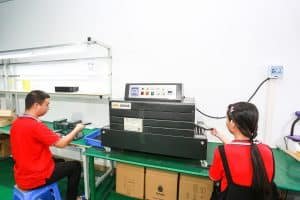
13. Heat Shrink Wrapping
The batteries undergo a heat shrink wrapping process to ensure a tight and secure fit around the product. This adds an additional layer of protection and makes the batteries ready for retail or bulk shipping.
14. Warehouse Storage and Shipping
The final step involves counting and recording the completed batteries as they are moved to the warehouse. Before shipment, the batteries are carefully inspected again to verify quantity and packaging integrity, ensuring they meet customer requirements.

Why This Process Matters
Every step in this production process is designed to ensure that the batteries meet the highest standards for safety, performance, and durability. By sharing this process, I hope to give clients who cannot visit the factory a clear and detailed understanding of the manufacturing workflow.
This rigorous production system not only guarantees quality but also highlights the effort and precision that go into making every single mobile phone battery. Whether for a large order or a custom project, we ensure that the final product meets our clients’ needs perfectly.